Monday, November 28, 2011

To Add Zing to Leftover Turkey


If you cooked more turkey than you could possibly eat on Thanksgiving as I did, (or if you ever have extra turkey after a meal) then you might enjoy making this fresh cranberry sauce to liven up a leftover turkey sandwich or just as a side with sliced turkey.


Unlike most fresh cranberry sauces, it doesn't have any orange flavor or components. It does have fresh apple, dried figs and some port but you could probably sub raisins for the figs and another liquid for the port and still get a great sauce, just different. I've found that fresh cranberries these days seem to be on the large size, so I pulse them a few times in the food processor. If you like the texture of whole cranberries that have popped, or have smaller whole cranberries, or don't own a food processor, you could probably skip that or chop the cranberries up with a large knife.

We had this with our Thanksgiving dinner and it was really good with the turkey, playing up the turkey flavor. Since I adore turkey in many of its renditions, this was a good thing. This looks like jewels when served in a clear or crystal dish, but is pretty in any dish you choose.

If you celebrated American Thanksgiving last week, hope it was a great time.
XO Elle

Fresh Cranberry Sauce with Apples, Figs, and Port

Many cranberry sauce recipes include oranges but if, like me, you have a guest who is allergic to oranges, try this cranberry sauce. To give it extra crunch, you could fold in some pomegranate arils.

1 bag fresh cranberries (about 12 oz)
2 tart apples
4 dried figs, cut in small dice
1/4 cup sugar
1/2 cup water (or orange juice or pomegranate juice)
1/4 cup port
1/2 teaspoon vanilla
1/4 cup chopped, toasted pecans (optional)

Wash the cranberries and pick over them to remove any that are soft. Place in food processor fitted with metal blade.

Cut the apples in half and remove the core and stem and blossom ends. Cut each half into four pieces and put them into the food processor with the cranberries. Pulse a few times to roughly chop the fruit.

In a medium saucepan combine the sugar, water (or juice), and port. Stir to combine. Add the chopped fruit and figs and stir again. Place the saucepan over medium-high heat and cook until mixture comes to a simmer. Reduce heat to lowest setting, cover saucepan and simmer for 10 minutes. Check about half way through. If mixture is too dry, add more water or juice...about 2 - 3 tablespoons. I too soggy, you can simmer uncovered a few minutes to thicken it up.

After the mixture has simmered for 10 minutes, remove from heat and stir in the port, vanilla (and the pecans, if using). Let the mixture cool a bit, then taste to see if you need to add sugar or water to make it the perfect sauce for you. Serve slightly warm or chilled.
Serves 6-8.

Wednesday, November 23, 2011

Whoosh...November Babe Lateness with Potato Cake


That whoosh sound was the days of
November from the last post to this one just whizzing by. Somehow we are now just a week away from the last day of the month, and I'm just getting my Potato Coffee Cake posted. Part of the reason is that I injured my left foot (I know, I know...it's always the right foot or knee, but sometimes I have to change it up a bit, right?) which came just about the time I would have been baking this luscious treat (having jsut gotten back from Seattle a few days before that). Part of the reason is also that I've been immersed in cleaning out my computer room and also have been busy at the computer with class work. Loving being back doing graphic arts, but it is always time consuming.

All excuses aside, this is one delicious cake. Tanna of My Kitchen in Half Cups, a super Babe and lover of breads made with potatoes, based this bread,


Kartoffel Kuchen or Potato Coffee Cake on a recipe in One Potato, Two Potato by Ray Finamore, but in the process of getting it ready for the Babes and Buddies she tweaked it and patted it and played with it and made it much better than the original recipe.

I made two 9-inch cakes and one big ring cake, which meant that the smaller cakes are also not terribly high and that I made double doses of the fantastic struesel so that each cake had a LOT of it. Once you taste it you'll understand why.

I found this very easy dough to work with. I did add the flax seed meal but didn't have any white whole wheat flour, so used regular whole wheat flour, which worked out well. The dough really liked to rise and I didn't have to bake it any longer than the recipe called for with the 9-inch pans. The big ring pan took 30 minutes.

For toppings I used the light raisins for one, putting them on the dough under the streusel, then I sprinkled pulverized dried orange peel on the dough of the second 9-inch pan, then sprinkled on dried cranberries, followed by streusel. Both got the dimple treatment once all of that happened.


The ring pan was filled with lumpy balls of the dough (half the recipe) which had each been rolled in cinnamon-sugar. No fruit was added, just half of the streusel. I expected to see lines of cinnamon-sugar through the dough when I cut into it, but didn't. It was slightly sweeter and the cinnamon fragrance was wonderful!

If you would like to be a Bread Baking Babes Buddy, and why not?, just bake this bread/cake by the 29th, post about it, and send Tanna an e-mail with a photo and a brief description of your experience baking it. She'll be glad to hear from you and will post a round-up shortly after the 29th.

Thanks, Tanna, for a great challenge and a wonderful coffee cake experience! Sweetie is having trouble resisting it...'just another small piece' has been heard often.

Do visit the other Babe's blogs to see their take on this recipe. Since I'm late you may need to go back a few days to see the post for this coffee cake, but you're sure to enjoy it. The links are to the right toward the top of the blog.

I'm also sending this over to Wild Yeast for the weekly Yeastspotting round-up. Stephanie of Hefe Und Mehr is the hostess this week while Susan takes a break.


Potato Coffee Cake
Recipe Adapted from: One Potato, Two Potato by Roy Finamore
Yield: 2, 10 inch round cakes; 4 eight inch round cakes
From the books intro: There are a lot of things called potato cake in this book, but this one's a real cake, of the coffee cake school. It's based on an old Pennsylvania Dutch recipe.

Ingredients:

For the Cake:
1 pound russet or all purpose potato, peeled and cubed
8 tablespoons butter, cut into pieces
2 teaspoons active dry yeast
3/4 cup brown sugar
2 large eggs
5 cups AP flour
1.5 cups white whole wheat flour
1/4 teaspoon nutmeg, freshly grated
4 tablespoons flax seed meal
1/2 teaspoon salt

For the Streusel
1/2 cup oat bran
1/2 cup whole wheat flour
1 cup light brown sugar
1 teaspoon cinnamon
8 tablespoons butter, room temp.
3/4 cup walnuts or pecans or almonds
1/3 cup white raisins

Directions:
1. Cook potatoes until very tender, just falling apart.
Drain and reserve potato water.

2. Idealy: rice the potatoes otherwise mash them.
Combine with butter and 1 3/4 cups warm potato water. Allow butter to melt and water to cool to luke warm.

3. In a standing mixer bowl: mix together the potatoes, potato water & butter, yeast, sugar, eggs and 2 cups of flour.
Beat until smooth. This is VERY liquid at this point.
Cover the sponge with plastic and leave in a warm place until it's bubbling happily.

4. Original recipe allowed 1 hour for this.
I altered this to a 5 hour rest in the fridge.
I'm working on the premise that a coffee cake is a morning thing so I aimed for an overnight rise in the dough with shaping in the AM.


5. Stir in remaining 4.5 cups flour, nutmeg and salt using the dough hook (or strong wooden spoon) for about 5 minutes. Dough should be very smooth. I never got a really smooth dough. I tried using Richard Bertinet's slapping technique for very liquid doughs but didn't really have any success.
I probably added another almost 1 cup of flour here but didn't want to push it anymore than that.

Cover again & leave to rise until doubled.

6. Again, original recipe allowed for 1 hour. I let this rise overnight.

7. Punch the dough down and turn out onto a lighty floured surface.
Divide the dough in half. If you work quickly while the dough is chilled you can get a reasonable nicely tucked round. As it warms, it'll get more liquid on you.
Shape into two rounds. I did four rounds and used 2 8 inch and 2 10 inch round cake pans. My four cakes were about 2 inches tall.
Original recipe: Place into two 10-inch round cake pans.

8. Preheat oven to 400° at least 20 minutes.

9. For the Streusel Stir flour, brown sugar and cinnamon together in a bowl and add butter.
Mix together creating a soften mixture with dark color and sticky texture.
Work in the nuts.

10. Sprinkle streusel over the cakes.
When cakes are covered, dimple the cakes with your fingers - much like dumpling foccacia.
Dimpling will bury some of the crumbs and leave others on the top.

11. Cover with plastic.
Allow to rise in a warm place until doubled, taking about 45 minutes.

12. BAKE Bake cakes at 400° 20 to 25 minutes.
Cool on rack … but not cold … this is too good warm.

Tanna's notes:
This is beautiful toast!
Freeze the second cake if you can get it to the freezer before it's gone.
Notes: my 1 pound of potatoes, cooked then mashed equaled 576 grams of mashed potato
I got lazy here, didn't get out my ricer. Potatoes were perfectly cooked and mashed easily with a fork.

Make as two loaves if you want it tall.
Make into four loaves as I did if you want it lower. My four were something like 2 inches tall.

Double the Streusel if you make this into 4 loaves.
I changed the original recipe from 1 cup AP flour to the oat bran & whole wheat.
I increased the sugar from 3/4 cup to a 1 cup and used brown instead of white … I most always use brown unless it really changes something basic to the outcome; just like the caramel flavor it gives.
Original recipe called for 1 package active dry yeast. I used 2 teaspoons. I don't think it would work to cut it any more. Also, original recipes called for dissolving yeast in 1/4 cup potato water. I put all the potato water into the potatoes with mashing and whisk the yeast into flour mix.

Saturday, November 12, 2011

Butternut Squash Ravioli and Spinach


My recent trip to Seattle not only included a visit to the University of Washington Arboretum where the photo above was taken (I just LOVE autumn colors so had to post one more!) but also a wonderful dinner at Smash, a small restaurant which focuses on small plates and nice wines. I was particularly taken with an entree which had a bed of spinach topped with luscious tender ravioli filled with ginger enhanced butternut squash. A silky browned butter cream sauce with a hint of Marsala pulled it all together. I decided to see if I could make something similar at home.


The first thing I did was to purchase some fresh pasta ravioli made with butternut squash and sage. The filling had more cheese than the restaurant made ones, but they looked like they would work just fine. Then I made sure I had fresh baby spinach, more butternut squash that I could prepare to go on the side and the ingredients for the sauce. Although the extra squash might seem like too much, ravioli doesn't really have a lot of squash in that filling so additional veggies seemed like a good idea. I used to have Marsala, but couldn't find it and the sauce really needs it. Marsala must not be too popular...the bottle I purchased at the Safeway was dusty on the shoulders.

The real challenge was replicating the sauce because it really does bring all the other flavors together. I started with the ingredients for a basic white sauce: butter, flour, milk & cream, and salt and pepper. In addition I added some ginger because the ravioli I purchased lacked the ginger in the filling that the restaurant used. I also added some Parmesan cheese, a dash of sage and the all-important Marsala. To capture the nuttiness found in the restaurant sauce, I browned the butter gently until it was a medium golden brown and then added the flour/ginger combination. When it came time to add the Marsala I added one teaspoon, tasted, then added a second teaspoon. That was all it needed, but it added just the right hint in both flavor and fragrance to let you know it was there.


The butternut squash on the side wasn't part of the restaurant meal, but Sweetie is used to big plates, not the minimal ones found at trendy restaurants. He really liked the contrast of the delicate ravioli and creamy sauce with the squash which had been pan roasted and was still slightly al dente. It was a slight bit sweeter, too, which was a nice counterpoint to the spinach. Although I could have seasoned the spinach I remembered that the restaurant seemed to use plain spinach, wilted, under the ravioli, trusting no doubt that the seasonings in the sauce and pasta would suffice. I used about 5 cups baby spinach, but would use more if I made this again.

Timing is important when making this dish. Plan on having everyone ready to be at the table once the pasta is done. Parsley can be minced ahead of time. The pasta water needed to be fully boiling and then the pasta only takes 5 minutes to cook, so the sauce should be made ahead a bit and kept warm while the pasta cooks. If the spinach has been rinsed and put into a microwave safe bowl, the wilting takes only a minute or two after starting the pasta. Of all the elements, the pan roasted squash takes the most time but it can be made ahead and reheated in the microwave once the spinach is wilted and the pasta is in to boil. Once the pasta is just cooked, it can be drained and the plate put together quickly. Serve at once while everything is still hot.

I hope you try this one. None of the elements are difficult as long as you can find ready-made butternut squash raviolis. It makes an impressive and delicious plate of pasta and vegetables and somehow seems very luxurious as you eat it. The sauce makes enough for 4 but I only had pasta enough for two, so the recipe is for two. You could increase the ingredients to use the whole squash and buy a couple bags of baby spinach (10 oz each) and double the amount of pasta to serve four and there should be enough sauce.


Butternut Squash Ravioli
with Wilted Baby Spinach, Pan-Roasted Butternut Squash and Browned Butter Sauce


1 medium butternut squash
1 tablespoon olive oil
1/2 teaspoon salt
1/8 teaspoon sage
1 tablespoon grated onion
1 tablespoon pure maple syrup
4 tablespoons unsalted butter, cut into small cubes
4 tablespoons all-purpose flour
1/8 teaspoon ground ginger
2 cups milk or a combination of milk and cream (I used 1 1/2 cups evaporated non-fat milk and 1/2 cup "1/2 and 1/2" light cream)
salt and pepper to taste
2 tablespoons Parmesan cheese
2 teaspoons Marsala
dash ground sage
1 package butternut squash ravioli (about 8 oz. for two)
1 bag (10 oz) baby spinach, well rinsed but not dried
1 tablespoon Italian parsley, minced

To make the Pan-Roasted Squash:Cut the butternut squash in half. Reserve the other half for another use and peel one half. Cut to reveal any seeds and remove seeds and stringy materials from the inside if there. Cut the squash into 1/2 inch dice. Set aside.


Heat a skillet (cast iron works best for this) over high heat. While skillet is heating, place the squash cubes, olive oil, salt, sage, and grated onion into a gallon zipper bag or large plastic bag. Close and shake vigorously to coat the squash pieces with the other ingredients.

When a drop of water dropped on the skillet sizzles, add the seasoned squash cubes. Use a spatula to flatten the mixture and compact it a bit. Let it sit undisturbed for 30 seconds, then reduce the heat to medium-high and cook for another 30 seconds.

Turn the squash with a wide spatula to bring the browned side up and get the unbrowned side in touch with the pan. Cook another minutes. Repeat. Add the maple syrup and stir to combine it with the squash mixture. Flatten the squash mixture again and let cook 30 seconds. Turn the mixture a few more times, letting the squash brown a bit before turning. Check for how done the squash is by tasting a piece. It should be softened but still have a little resistance, like al dente pasta. Correct seasonings if needed. Remove from the heat and reheat in the microwave just before serving.

To make the Browned Butter Sauce:In a medium saucepan with a heavy bottom, melt the butter over medium-high heat. As the butter melts, swirl the pan to mix the butter solids in with the clarified butter. Continue to cook and swirl until the butter is colored a medium golden brown. Remove from the heat. Combine the flour and ginger in a small bowl. Whisk the flour mixture into the browned butter. The residual heat will cook the flour enough so there is no need to return the mixture to the heat. Whisk the milk in, all at once, and continue whisking to thoroughly combine the milk mixture and flour mixture. Return to medium heat and, whisking constantly, cook until the mixture thickens, about 8-10 minutes. Remove from the heat and whisk in the Parmesan, Marsala, and sage. Taste for seasonings and add salt and pepper as desired. Place a piece of plastic wrap directly on the top of the sauce to keep it from forming a skin. Set aside until needed for plating the pasta. When that time comes, remove the plastic wrap and gently heat the sauce again, whisking as needed.

Start a large pot half filled with water to boil. Add 2 teaspoons salt if you like your pasta salted.


To make the spinach:Take the washed spinach and place in a microwave safe bowl.Cover with waxed paper or a plain paper towel. Set aside.

The pasta:Once the water comes to a full boil and you know that you can serve in about7-10 minutes, reduce the heat to medium (so that water is barely boiling) and gently place the ravioli, one by one, into the pot. Start your timer for 5 minutes. About half way through that time you may want to flip the ravioli over but don't if they start to break up or lose filling.

Now, once the pasta is in the boiling water, you can reheat the butternut squash for 2-3 minutes in the microwave. Next wilt the spinach by cooking on high 1-2 minutes in the microwave. Remove the plastic from the sauce and gently reheat. Get your plates ready.

At 5 minutes (or at whatever time is recommended for cooking the pasta by the manufacturer), drain the pasta gently. Place half the spinach on each plate, spoon on a little of the sauce, place half the pasta on each plate (leaving some space on the side for the pan-roasted squash) and spoon a generous amount of sauce over the pasta. Sprinkle some minced parsley on top. Spoon some of the squash on the side and repeat with the other plate. Serve at once.

A dry red wine goes well with this dish. Toast the cook. He or she will deserve it after putting this meal together.

Friday, November 11, 2011

Fall Fun


Just back from a visit to Seattle. We were lucky (or perhaps brought California sunshine with us?) because all the rain that had been called for as I packed never happened. It was great fall weather with a nice chill to it. That's probably why the fall color was fantastic!

One of the places I visited was the U Dub (as it is known around here) Arboretum where there were lots and lots of fully colorful trees of all sorts. Bliss for me since our fall color is more muted.


We also made sure to check in at Trophy Cupcakes so that we could try the current seasonal one...Candied Yam with a Toasted Marshmallow topping. It was sort of like a good carrot cake but with yam flavor. We also shared a Mocha Chocolate one that was amazing. They really know how to do butter cream frosting at Trophy. They are shown in the photo at the top, surrounded by the leaves we collected on the walk near there. We used to collect fall leaves when the kids were young and iron them between sheets of waxed paper, then hang them up in the windows on cords to let the sun shine through.

All of this indulgence had been preceded by two good sized walks, not counting the walk at the Arboretum the day before. One of the things I love about Seattle is that is seems like a really walkable city to me.

I'm going to be making a dish (or my version of it at least) that we tried at a restaurant in Wallingford area called Smash. I'll post it in the next day or two. It involves two of my favorite flavors: butternut squash and spinach.

XO Elle

Friday, November 04, 2011

A Star is Born (uh, Baked)


Now that the air is nippy and the fall color has turned the trees to flame, the urge to start baking for the holidays has hit. Natasha, my dear friend (but not a Bread Baking Babe...that's Natashya) loaned me a wonderful book called Festive Baking - Holiday Classics in the Swiss, German, and Austrian Traditions by Sarah Kelly Iaia.

It really started my creative juices flowing, even though many of the recipes are for things related to Christmas, not the fall. One recipe that called to my crafty side was in the bread section (of course it was). It's called Geflochtener Weihnachtsstern or Braided Christmas Star. The dough called for is a typical rich sweet dough flavored with lemon zest. I decided to go with something more in keeping with autumn and harvest...Anadama bread. I've made it before but this time I used regular corn meal and less molasses and I like it better this way.


The finished bread was soft and mellow with just a hint of molasses. It kept the shape of the star really well, too. It goes well with hearty fall soups or stews and makes wonderful toast.

Once I'm back from Seattle I plan on making French Toast with any bread that is still around. The start shape was barely contained by the half sheet baking sheet, which is a lot of bread, plus I baked the other half of the dough into a nice loaf and it made something line 16 slices for sandwiches (or French Toast since Sweetie loves French Toast.) I used three of the 'arms' of the star today to make s small batch of stuffing to go with the grilled chicken and asparagus we had for dinner. It made excellent stuffing. What a versatile bread!

Hang on to this recipe in case you want to bake a star for the holidays. It really is easy if you know how to braid, yet looks super impressive. You could probably even use thawed frozen bread dough if creating bread dough isn't our thing. Just be sure to glaze it with the egg wash so that it is that gorgeous golden brown.


Anadama Bread and Star
Star shaping from Festive Baking by Sarah Kelly Iaia
makes two loaves or one loaf and one big star

1/2 cup regular corn meal
2 cups water, divided
1/3 cup molasses
6 tablespoons butter, softened,
1 cup sourdough starter
1 cup whole wheat flour
3 1/2 cups (about) all-purpose flour
1 teaspoon salt
oil for greasing
1 egg beaten with 1 tablespoon water for egg wash

In a bowl, whisk together the cornmeal and 1 cup of the cold water. In a saucepan over medium-high heat, bring another cup of water to a boil. Add cornmeal mixture and cook, stirring constantly, until mixture is very thick, about 3 - 4 minutes. Stir in the molasses and the butter.
Add the whole wheat flour and stir until all is combined. Transfer mixture to bowl of an electric stand mixer and cool to tepid. (Or transfer to a mixing bowl large enough to mix the dough by hand and then knead in the rest of the flour.)

Add the 1 cup sourdough starter to the mixing bowl with the tepid cornmeal mixture. Mix on low speed with dough-hook attachment ( or a wooden spoon) for several seconds. With dough hook in place on the stand mixer add flour 1/2 cup at a time, mixing for several seconds after each addition. Sprinkle in the salt, and continue mixing until dough completely comes away from sides of bowl, about 7 minutes.

Lightly oil a bowl. Form dough into a ball and place it in the bowl. Oil a sheet of plastic wrap and loosely cover dough. Allow dough to rise for 1 1/2 to 2 hours, or until it has doubled in size. (At this point I punched the dough down, recovered it, and put it in the fridge overnight. The next day I let the dough warm up and then did the shaping.)

Lightly grease 1- 9 x 4 inch loaf pan. Line a sheet pan with silicon mat or parchment for the star. Press down dough and divide it into 2 equal pieces. Shape one piece loosely into a loaf and place in the prepared pan pan. Cover with oiled plastic wrap and allow to rise for 30 minutes, or until loaf has doubled.

For star, take second half of dough (all the dough remaining) and divide it into six equal pieces (using a scale really helps with getting the pieces about the same size). Set one piece aside. Each of the other five pieces is used to make one of the star 'arms'.


Take one of the pieces and divide it into three equal pieces. Roll each of those three pieces into a rope about 8 inches long, with a taper at one end. Join the three ropes at the tapered end and braid the ropes. Repeat with each of the next 4 pieces.

Place the braided pieces on the prepared baking sheet with the tapered end pointing out, to shape a five-point star. The ends at the middle should touch and so pinch them together.

Take the last piece of dough and roll into a long rope, about 20 inches long. Starting at the center of the star, wind the rope around in a spiral over the center of the star. Tuck the end under the spiral.

Cover the star with oiled plastic wrap and set aside to rise, until doubled in bulk. When almost to that point, preheat the oven.

When oven is fully preheated, brush the star and the loaf with a wash of 1 egg beaten with 1 tablespoon water. Make sure that the wash goes into the crevices of the star. Slash the top of the loaf.

Bake in preheated 350 degrees F oven. Bake loaves for 35 minutes to 1 hour, or until bread is dark golden brown and sounds hollow when tapped. Star may take a shorter baking time than the loaf. That's OK.

Allow bread to cool in pans for 5 minutes, then turn out onto wire cooling rack. Serve warm if possible.


This bread is mellow and soft, barely sweet from the molasses and makes really good toast.

Sunday, October 30, 2011

Goodbye October!


I'ts getting chilly at night around here...and our new stove is taking the chill off in the morning. We won't be making s'mores using that stove, but maybe a Halloween pumpkin will do the trick.

Happy Halloween dear reader!

Thursday, October 27, 2011

Rum and Raisins Love Bananas


Sometimes there are ingredients hanging around the kitchen that need to be used up and my feeling is along the lines of mending a hem before it unravels more or picking the flowering tops off the basil to keep them growing...a task that is undoubtedly worthy but not particularly inspiring. Turning left over salad into soup falls into this area in my opinion.

Other times the ingredients are the kind you hope for...left over bread that will eventually be turned into stuffing or bread pudding, the end of a chunk of Parmesan that gives a great flavor to some soup, or one of my favorites...ripe bananas. A really ripe banana has golden yellow skin with dark brown spots. If all the skin is brown you may have gone too far, but it will still make some great banana bread.

That's what I did last week...made banana bread. The three medium bananas I used looked a bit like giraffes necks...the blotches of brown were pretty big but the skin was still golden, too. I used a recipe from one of my favorite baking books, Marion Cunningham's The Fannie Farmer Baking Book. This one is almost scone-like in texture and is less sweet than some but it has the benefit of raisins soaked in rum...the perfect complement to bananas.

About the only thing to know about this recipe is that the pan sizes are on the small size so plan accordingly. You can find the dimensions right under the recipe title. It also helps to remember that this kind of quick bread does best with minimal mixing of the batter once the dry ingredients are added.

Do give this bread a try when you find yourself with an overabundance of bananas...and some rum and raisins in the pantry.


Rum-Raisin Banana Bread
Makes two 8 1/2 x 4 1/2 x 2 1/2 inch loaves

1 cup raisins
6 tablespoons rum
3 cups flour
1 teaspoon baking powder
1 teaspoon baking soda
1 teaspoon salt
8 tablespoons (1 stick or 1/2 cup) butter, softened
1 cup sugar
2 eggs, slightly beaten
1/3 cup milk
1 cup ripe banana (about 2 large or 3 medium bananas)
1/2 cup chopped walnuts

Note: I used 1/2 cup regular raisins and 1/2 cup golden raisins.

Stir the raisins and rum together and let stand for at least 30 minutes or up to several hours, stirring occasionally. You can soak the raisins in the rum the night before and they will be plump and moist.

Preheat the oven to 350 degrees F. Grease and flour two loaf pans.

Stir and toss together the flour, baking powder, baking soda, and salt. Stir together the butter, sugar, eggs, milk, mashed banana, walnuts, and the raisins and their rum. Add the mixed dry ingredients and stir just until the batter is thoroughly blended. Over mixing causes the bread to become dry and tough.

Spread the batter evenly in the prepared pans. Bake for 1 hour or until a toothpick inserted in the center of the loaf comes out clean. Remove from the oven, let cool in the pans for 5 minutes, then turn out onto a rack to cool completely. I find it hard to wait until the loaves are completely cool. Slightly warm banana bread is hard to beat.

Saturday, October 22, 2011

Celebrating Another Year


Due to various things going on in my life...particularly work issues but also house projects, family feuds, Sweetie's shoulder issues, my knee injury, and on and on...this year has not been stellar in the blogging department, but another year of this blog has indeed passed. The challenge has been find in the time to post, but also finding the focus to remember to photograph food. I do prefer posts with photos of the dishes I'm talking about, don't you? Thanks to you, dear reader, the blog continues to pull me toward the computer so that I can share what I've made with you. Sometimes I wish I had a secret tunnel to your house (a fantasy I first read about on the Bread Baking Babes site) so that I could give you some of this freshly cooked or baked yumminess!

Now that some of last year's issues have been resolved I'm hoping to do a few more posts each month. I'm also dedicated to slowly but surely reducing the clutter and possessions in the house...and painting the walls in rooms that really need it, like my bedroom and the guest bedroom and parts of the living room, too. We'll see how far I get by Christmas!

To start off Feeding My Enthusiasms newest year let's turn to the King Arthur Flour Baker's Companion cookbook. I've become a big fan of King Arthur's products even though they don't send me any free samples or anything. Their specialty flours are wonderful. I use two of them this time. One flour is the Irish Whole Meal wheat flour which has a great texture with bits of the outer layer of the wheat berry that get lost when flour is processed a lot. The second one is the Ancient Grains flour which includes flours like amaranth...how cool is that? It add some subtle flavors that you don't get with plain flour.

So what are we baking today? A baked treat with nuts and chocolate chips. A seasonal favorite that can be baked year 'round because it uses canned pumpkin. I know that it is almost impossible to find canned pumpkin in some areas outside of the U.S., but you should be able to use cooked butternut squash...just be sure to run it through a food mill or process it in a food processor to make the cooked squash nice and smooth. If it's very watery, you may want to drain it in some cheesecloth. Canned pumpkin is pretty solid with minimal water.

Pumpkin Chocolate Chip Bread...doesn't that sound wonderful? This recipe is so easy and it make TWO large loaves. I froze the second one for future tea parties or when I need something sweet and baked but don't have time to bake (or I have too much paint on my hands...and face...but still want something to go with a cup of pick-me-up tea. I recommend using the butter/margarine combination. The sugar creams so much better with it and the texture of the loaf is a bit lighter, too.

Not a loaf bread kinda person? This batter would also make quite a few delicious muffins...just be sure to bake for a much shorter time.

Pumpkin Chocolate Chip Bread
from the King Arthur Baker's Companion Cookbook
Makes two loaves

2/3 cup shortening or 1 cup vegetable oil (I used one stick of butter and one stick of margarine, both partially melted in the microwave when I found that my vegetable oil had gone rancid. I rarely have shortening in the house)
2 2/3 cups sugar
4 large eggs
2 cups (or one 15-oz can) pumpkin - NOT pumpkin pie filling
2/3 cup water
3 1/2 cups unbleached all-purpose flour (I used 2 1/2 cups unbleached, 1/2 cup whole meal wheat (Irish whole meal flour from King Arthur, and 1/2 cup ancient grains flour mix from King Arthur.)
1/2 teaspoon baking powder
2 teaspoons baking soda
1 1/2 teaspoons salt
1 teaspoon nutmeg
1/2 teaspoon cinnamon (optional)
1 teaspoon vanilla extract
1 cup chopped pecans
1 1/2 cups chocolate chips

Preheat the oven to 350 degrees F.

In a large bowl, cream together the shortening, or oil or butter or margarine and the sugar. Beat in the eggs, pumpkin, and water. Add the flour, baking powder, baking soda, salt, nutmeg, cinnamon, and vanilla, stirring to blend, then mix in the nuts and chips.

Spoon the batter into two lightly greased 9 x 5 inch loaf pans. Bake the bread for 1 hour, or until a cake tester inserted in the center of one loaf come out clean. Remove bread from the oven. Cool it on a rack. Turn out of the pans and wrap completely cooled loaves well in plastic wrap and store it overnight before serving. (I ate some the same day and a slice the next day...didn't seem to be any different, so I vote for eating some while still slightly warm for that melted chocolate chip delight sensation.)

Sunday, October 16, 2011

Leaf Bread for Fall

The bodacious Bread Baking Babes are celebrating autumn this month by baking Fougasse, a delightful leaf-shaped bread, at the invitation of Elizabeth of blog from OUR kitchen, our Kitchen of the month.


Our regular posting day, the 16th of the month, coincides this month with World Bread Day, the annual event that encourages us to bake bread. We are asked also to honor the fact that we have enough food, a situation that isn't true for too many people in the world.

So today we celebrate both World Bread Day and baking with the Babes by baking fougasse, a shaped flatbread.

Fougasse is perfect for fall since it is traditionally shaped like a leaf, with the dough cut and stretched in such a way that, once baked, there is a lot of crustiness. That's a lovely thing in a flatbread like this, especially if you are serving it as an appetizer as I did, or with a nice cooler weather soup or stew.

Elizabeth gave us a couple of choices for the bread dough but indicated that we could also use our own recipe. I'd posted a foccacia recipe during the winter of 2008 and it used sourdough starter, so that's what I used. It made enough dough for me to make two loaves each of two variations. I was inspired by a fougasse that fellow Babe Susan of Wild Yeast had made which used gorgonzola cheese and figs to add flavor and texture to a fougasse which included rye flour.

I only used unbleached bread flour... no rye or other fancy flours this time... and paired the gorgonzola cheese with chopped walnuts. The result was awesome! There was no need for any additional butter or oil, although we did find that some slices of Golden Delicious apple went really well with that version of fougasse.

As Elizabeth days, "Because fougasse is baked on a stone instead of on an oiled pan, there are more crispy bits. Not too crispy though... it's juuuuust right! Of course, it can be cut with a knife but we think that fougasse tastes better torn apart."

The other half of the dough was flavored with freshly chopped herbs...Italian parsley, basil, and rosemary. I'm grateful to have not only enough for myself and Sweetie, but enough to share. I gave one of the herbed loaves to our renter because she loves bread and is on a fixed income so it helps her stretch her food budget a bit, too. Seems appropriate as we honor World Bread Day.

Try baking this easy and delicious Fougasse yourself...you'll be glad you did. There is only one rising, only a few ingredients, and trying out the shaping is fun and gives you another skill in the kitchen. You can choose your own additions or bake it plain and slather on the butter or dip the torn pieces of fougasse bread in a mixture of good olive oil and balsamic vinegar for an Italian touch. If you do bake it this month (by October 29th) be sure and send an e-mail with a link to your post (or a description of the bread and if you liked making it added to the e-mail if you don't blog) and a photo of the finished bread to Elizabeth to become a Bread Baking Buddy. She'll send you a badge and include you in the roundup.

Elizabeth was daring and baked her fougasse on a grill. I baked mine in the oven. Since I was using a baking stone (actually a pizza stone)


I shaped each leaf on a piece of baking parchment which I had laid on a wooden tray. Each was covered with oiled plastic wrap to rise. No corn meal was used on the parchment paper since I slid the bread and parchment paper on to the baking stone, then removed the loaf directly to the stone half way through baking (throwing the used parchment away).

Each loaf was shaped to fit the stone and they were baked one at a time. One day I'll have to spring for a larger stone so that I can bake two at a time. I also added moisture at the start of baking to help with crust development. I put ice cubes into a pie plate below the baking stone, plus sprayed the walls of the oven with water when I put the loaves in. The latter part of the baking time was done without the steam.

Now that you've heard how I did it, do visit the blogs of the other Bread Baking Babes (see links to the right). I'm also sending this over to Susan at Wild Yeast for the weekly Yeastspotting event. This week is sure to be a good one with entries from lots of World Bread Day posts, so check it out.


Sourdough Focaccia (with instructions for making Gorgonzola-Walnut Fougasse and Fresh Herb Fougasse)

2 cups 100% hydration sourdough starter
4 tablespoons olive oil, divided
1 cup water, divided
1/4 teaspoon active dry yeast
4 - 5.5 cups unbleached bread flour
2 teaspoons salt
additions like cheese, nuts, herbs, citrus peels, olives, etc.

In the bowl of a stand mixer place the sourdough starter. Add 3 tablespoons of the olive oil and mix briefly with the paddle attachment just until the oil is mixed in.

Make sure the water is lukewarm. Take 1/4 cup of it and add the dry yeast. Let sit 5 minutes until foamy.

Add the yeast, the rest of the warm water, and about half the flour. Mix with the paddle.

Switch to the dough hook. On slow speed add the flour, a half cup or so at a time, adding only a few tablespoons at a time toward the end. The dough will be soft. Add the salt and then knead with the dough hook on low to medium low speed for about 6 minutes, until the dough cleans the sides of the bowl and is smooth. Turn out on a lightly floured board or counter and knead in most of the rosemary, leaving about a teaspoon for the top.

Form the dough into a ball. Oil a large bowl (not metal) and turn the dough ball in the oil to coat. Cover with plastic wrap and place in a warm place and let rise until doubled in bulk. It took mine four hours, but even my 'warm' place wasn't as warm as it should have been.

Punch dough down, turn out of the bowl onto a lightly floured surface, knead a few time to get rid of the extra trapped gas.

At this point check out the directions below to make fougasse. To make focaccia, follow this link.


These were the instructions we were given. Notes on my variations are in italics below:

1. Mix, knead and allow your favourite bread dough to rise to double (I used the focaccia recipe above). If you are adding anything like olives, sun-dried tomatoes, onions, caramelized garlic cloves and/or walnuts, mix them into the dough near the end of kneading it or on the first turn of the dough (I added mine once the dough had risen and was ready to shape...just kneading the cheese and nuts into half the dough, then cutting that dough ball in half and shaping each into a leaf shape...then doing the same for the other half of the dough by adding the herbs for the second two loaves which were each shaped into a leaf shape:

for the nut/cheese versions:
1/2 cup chopped walnuts
1/2 cup crumbled gorgonzola cheese

for the herbed:
1 tablespoon EACH chopped Italian parsley, basil and rosemary).

2. If you are wanting herbs/spices on top, please add them just before baking.

3. Shaping: About an hour before baking the fougasse, turn the dough out onto a lightly floured board and press it out into an oval (or a rectangle; or a circle). Using a floured rolling pin, roll the dough out until it is about 1 cm (1/2 in.) thick. (I shaped it into a tall triangle.)

4. Sprinkle corn meal (to act as ball-bearings) on the peel - or an upside-down cookie sheet. Lay the shaped dough on the peel. Using a pizza wheel and "swift, decisive strokes" cut a design of a leaf or ladder into the dough. Take care not to cut through the outer edges. From the edges, pull the dough outwards to make sure the cuts are spaced. (I used parchment paper instead, but the dough with a stiff plastic scraper, then gently spread out the dough to open up the cuts to create the leaf shapes...sort of triangular)

Cover with a clean tea towel followed by a plastic grocery bag and allow to rise. (Robertson allows the shaped bread to rise first and does the slashes at the last minute. Naturally, because of my stellar reading skills, I didn't notice that until I had already made fougasse several times by slashing it directly after shaping it.) (I did notice that I had to open up {gently} some of the gaps that had closed up during the rising time. Since my loaves were on parchment and covered with oiled plastic wrap, it was easy to uncover them and gently move the dough to open up the shape again.)

5. Just Before Baking: Drizzle with olive oil and scatter coarsely ground sea salt over top. (You can also do this step just after the bread is baked; that is what Robertson suggests. Or you can forget to add the olive oil at all, as I did the last time.) (I skipped the olive oil and salt part since the additions were flavorful enough.)

6. Baking in the Oven: Put a pizza stone on the middle or top shelf of the oven and turn it to 400F (200C) (I used 450 degrees and added steam with ice cubes and water spray for extra crunch in the crust). Transfer the fougasse onto the hot stone and bake for about 15 minutes, turning it around at least once to account for uneven oven heat. (You may need 20 minutes or more of baking time if you want a darker crust.)

7. When the fougasse done, remove it from the heat and allow to cool on a well-ventilated rack. To serve, break it apart and dip it into good quality olive oil with herbs if you want.


Thank you Elizabeth for a wonderful, delicious, will-make-this-again challenge. My only other attempt at making fougasse was a dud so it was a lot of fun to do it again and discover that it is a great bread. The ultimate test is how quickly it is gone. All four loaves were finished in less than two days (with Straight Shooter having almost a whole one for breakfast yesterday!) so it truly was a success.

Monday, October 10, 2011

Still Harvesting

There are still tomatoes ripening on the window sill as the rain comes down outside. I know that there will be green tomatoes with thin skins that will crack or split from the rain, so once it stops I'll try to bring them in and see if I can use them for chutney or, if they are almost ripe, see if I can encourage them to ripen before they spoil.

Fortunately there are lots of ripe ones ready to use so yesterday I made a lentil soup that gets it's bright flavors from fresh garlic, tomato, lemon juice and Italian parsley which are added at the end. I found the recipe on Natashya's wonderful blog, Living in the Kitchen with Puppies. She has a number of lentil soup recipes but this one matched up with ingredients I had on hand and sounded like a perfect use for some of the fresh tomatoes.

I made the cooked part of the soup yesterday so that it could sit overnight in the fridge, letting all the savory flavors of onion, carrot and celery mingle over time. After reheating today I was able to add the garlic, tomato, lemon juice and parsley and serve it up for lunch pretty quickly. It was perfect for a chilly rainy day and pretty filling, too.

To go with the soup I made some bruchetta (using MORE tomatoes). Using some oatmeal bread I made a few days ago, I made thin slices, brushed them with olive oil on one side, and toasted them in a hot cast iron skillet, turning the slices to grill them on the second side. Once they were toasty, I turned them all with the olive oil side up and rubbed that side of each with a raw garlic clove. Don't skip this step...it really makes a difference in the final bruchetta's taste. While the toasts were cooking I finished up the bruchetta topping. Earlier I had finely chopped a ripe Brandywine tomato. It had very few seeds, so I left on the skin and kept the seeds. If my chosen tomato has a lot of juice, seeds, or a thick skin, I would probably remove them and just finely chop the tomato flesh. For finishing up, I added finely minced garlic, chopped basil and a splash of olive oil and smaller splash of aged balsamic vinegar. These were mixed together with the chopped tomato. To serve, this mixture is piled on the bruchetta toasts.

They should be served right away while the toasts are still crisp and crunchy. The contrast of textures and flavors is delicious! This only really works with ripe tomatoes, so when you have some do give this a try. The standard recipes call for baguette sliced on the diagonal to give the largest real estate for holding the topping. If you have some other kind of sturdy country bread, by all means use it.

For those readers who are interested, we are to the point of painting the new walls in the new stove area in the living room. (This stove will help heat the downstairs part of the house. The upstairs stays chilly but I like to sleep in chilly rooms.) We have also chosen the new lights for the stove area to replace the old can lights. The walls have also been cleaned and the blue tape to keep the paint off of the wood at the ceiling and the wood trip around the door out to the deck has been applied. The freshly painted wall is going to be two-toned with the outer wall in Swiss coffee and the inner wall in Antique White which has a golden glow but is very pale. We also discovered that a local hardware store that had gone downhill has new ownership and now is a great resource. I need new door and drawer handles for the new storage and they have some great ones that I haven't seen elsewhere. Good times.


Here is that great Lentil Soup...pretty easy and very delicious:

Lemon Parsley Lentil Soup
- serves 4-6

2 tbsp vegetable oil
1 onion, halved and sliced
1 rib celery, sliced
1 large carrot, diced
1 tsp salt
6 cups chicken or vegetable stock, or a mix of the two.
1 cup lentils
1 diced tomato
4 cloves garlic, minced
Juice of 1 lemon
1 cup chopped parsley
Black pepper

Rinse and pick over lentils.
In a small soup pot, heat vegetable oil on medium/high.
Add onions. Sauté until soft and starting to brown, about 10 minutes.
Add celery, carrots and 1 tsp salt. Sauté 5 minutes more.
Add stock and bring to a boil.
Add lentils and bring back to a boil.
Drop heat to gentle simmer and simmer until soft, about ½ hour.
Add tomato and garlic, heat through. Add lemon juice and parsley, heat through.
Season to taste and serve.

Bruchetta with Fresh Tomatoes and Basil
- serves 2

1/2 baguette, sliced in elongated thin rounds (or your own country loaf cut into thin slices)
1 tablespoon olive oil
1 clove garlic, sliced in half
1 medium to large ripe tomato, finely chopped
1 clove of garlic, finely minced
1/2 tablespoon olive oil
1/2 teaspoon aged balsamic vinegar
2 teaspoons finely chopped fresh basil
salt and pepper

Lightly brush the slices of bread with the olive oil. Grill on a barbecue or on a cast iron grill or skillet, first on the olive oiled side, then on the other side. Rub the toasted olive oiled side with the garlic clove. Set aside. (I kept mine warm in a low oven until time to serve them.)

In a small bowl combine the chopped tomato, minced garlic, olive oil, balsamic vinegar and chopped basil. Taste and add salt and/or pepper to taste.

When ready to serve, arrange the toasts, olive oil side up, on a plate or bread board. Scoop some of the topping on each. Serve at once while bread is crisp and warm.

Saturday, October 08, 2011

Harvest

When we first moved to our part of northern California, we tried out being exhibitors at the local county fair. Both kids won some ribbons for craft entries and I eventually won at the fall Harvest Fair for an over the top Victorian gingerbread house. Although the kids loved the summer fair with its fun carnival rides and contests and lots of animals and fair food, Sweetie and I have always been fond to the Harvest Fair which has more of a focus on local products and local wines. There are still lots of crafts and cute animals and fair food but the crowds are smaller and the pace is more relaxed.


This year I was lucky enough to do something I've wanted to do for a long time...work the Harvest Fair. Although the long days and challenging cash register set-up were tiring, I had a great time. The people I worked with were old hands at doing the wine sales (yes, that's where I ended up...ringing up wine sales! Isn't that a hoot?) and they were generous with their knowledge and welcoming as co-workers. I felt very fortunate to have such a positive work experience and to meet them. When there were slow times we were able to chat a bit. Each one was a stellar human being and interesting, too. I hope I see them again....maybe next year I'll work the fair again.


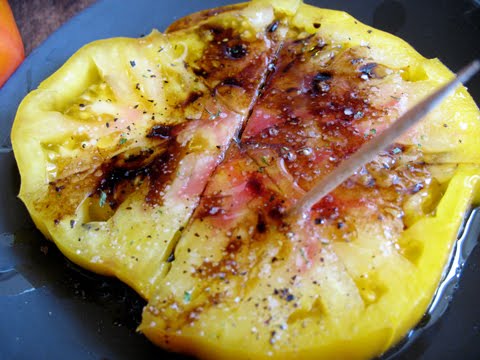
Speaking of harvest, we have been harvesting lots of tomatoes. Due to the cool and rainy spring and early summer everything is late, but there is something very special about being inside on a cool, rainy October evening and eating ripe heirloom tomatoes

that were only picked a day or two before. That wonderful fresh tomato fragrance is still strong, the slices are juicy and succulent, especially with a sprinkle of good olive oil, another sprinkle of aged balsamic vinegar, and a dash of garlic salt and fresh pepper.


It's hard to beat and makes the waiting worthwhile.


Some of the plum type tomatoes were cooked and the skins and seeds removed to make a fresh tomato sauce. Although I neglected to take a photo (thought I had, but the memory is not as reliable as it once was), I can assure you that the baked pasta dish I made using that sauce was excellent. I'll share the recipe at the end of the post.


The other harvest that is going on right now is of seeds. I have let some of the French thin green beans go to seed and the seed pod to dry out.


Before the rains came this week I was able to bring in the dry pods and remove the beans...I felt a little like Jack in the fairy tale


...those few beans will sit in the freezer until about March, then I'll plant them for the spring and summer harvest of fresh, delicious tender green beans. This kind of bean produces all at once (over about a week and a half), so I do succession plantings to keep the beans coming so having a lot of beans (seeds) is a good thing.


I also harvested some sweet pea and morning glory seeds to plant early next spring. I've tried planting them now but the snails usually munch them right up during the winter. Come spring I have no seed and no seedlings. If I can figure out how, I'll also collect tomato seeds and dry them, then freeze them for next years' seedlings.


Sorry about the lack of photos, but I'm sure you've baked a penne pasta casserole before...and that's what it looked like. The flavors went really well together. Besides, who can hate melty cheese?


Spinach Chicken Pasta Bake with Three Cheeses

1/2 lb (dry) penne, cooked according to package directions and drained. (I used whole grain penne but any kind will do...you could use another type of pasta, too, if no penne is in your pantry)
1 1/2 cups cooked chicken, cut into bite sized pieces
5 oz (half a box) frozen spinach, thawed and drained
2 cups tomato sauce, fresh if possible
1/2 cup feta cheese
1/2 cup grated Parmesan cheese
1 tablespoon dry oregano
1 teaspoon dry basil
salt and pepper to taste
three sticks string cheese (or about a cup grated mozzarella cheese)

Preheat oven to 375 degrees F. Grease a 9 x 13 inch baking dish. Set aside.

In the pot that the penne was cooked in, mix together the cooked chicken, frozen spinach, tomato sauce, feta cheese, Parmesan cheese, oregano, basil and salt and pepper. Add the cooked and drained penne and stir to combine. Put this mixture into the prepared baking dish.

Cut the string cheese into coins and place evenly over the pasta mixture (or scatter the grated mozzarella evenly over the casserole.)

Bake in the preheated oven for 45 -50 minutes or until heated through and the cheese is melted on top.
Serve while hot. A salad and some crusty bread is a nice addition to this dish.

Serves 6 -8.
Tuesday, October 04, 2011

Pretzel Buddies


One of the joys of the Bread Baking Babes is the fun of baking bread...another is baking with the Bread Baking Buddies because it expands our world and gives us the opportunity to visit other blogs and see wonderful photos of the bread of the month and to see if our experience was anything like theirs. Sometimes the Buddy is new to bread baking, but often they are very experienced and I learn a lot by reading their posts.

In September we gathered around the virtual kitchen table and baked Pretzels. Some of the Babes even did a Google+ virtual group bake! The Internet is wonderful...makes the world smaller and brings us closer together. Now if only we could smell the lovely fragrances in each other's kitchen as the bread bakes.

Our intrepid Buddies this month did some excellent twisting. They baked pretzels both sweet and savory. Their Buddy Badges have been sent and now it is our reader's turns. Do visit their sites by clicking on the links so that you can read all about it. To whet your appetite here is the round-up:

KELLY :
GOSIA :
JUDY :
CATHY :
MICHELLE :

Thank you Cathy, Gosia, Michelle, Kelly and Judy! You are great bakers and wonderful Buddies and I hope you bake with us again.

Dear readers, do check out their posts and be inspired yourselves...it is still a great time for soft pretzels.

Wednesday, September 28, 2011

Calling All Buddies!


One of the fun things about the Bread Baking Babes is that lots of bloggers who bake the bread of the month get to be Buddies. Not only do you get to make something delicious, you can read all of the Babe posts to get our take on it, you can always e-mail the Kitchen of the Month (this month that's moi) to get help with the recipe and, after the 29th, you get a Bread Baking Buddy Badge to display on your site if you have a blog. As you can see, tomorrow is the last day for posting your bread and sending me a link at plachman at sonic dot net.


Since life is rearely simple, I'll make the cut-off midnight East Coast of America Daylight Savings Time (9 pm my time) and send badges to everyone who have e-mailed me by then. The round-up will have to wait until Monday or Tuesday of next week due to circumstances that are allowing me to have fun and earn money all weekend.


So give those pretzels a try, send me an e-mail with info on how the baking went, how you liked them, etc, and please include a photo.


XO Elle

Saturday, September 24, 2011

Plethora


Doesn't English have the oddest words? Due to the chilly and wet spring and early summer, we had a dearth of ripe tomatoes, even in August. Dearth sounds so heavy and sad (and means a lack of or inadequate supply or [even more so] a scarcity that makes something dear) which is appropriate since the scarcity of tomatoes was a sad thing. Now, with the onset of almost a full week of hot weather, we have a plethora of ripe tomatoes!Plethora is another one of those unusual words but it is perfect for the current situation; we do indeed have an excess, superfluity, over supply, profusion and abundance of a rainbow of heirloom tomatoes.

I've been giving them away to friends, eating them at almost every meal, and still there are plenty of bright red Costoluttos, yellow-orange Persimmons, striped Green Zebra tomatoes with a yellow tinge under the stripes to let me know its ripe, big fat Marvel Stripes and dark green brown and pink Black Krims, plus a dusky plum shaped one that is twice the size of my old favorite Romas. This makes me the opposite of sad as you can imagine. The wait was worth it. Don't you just love it when you finally get something you've been waiting patiently for and it actually lives up to your expectations?

I have to boast a little. One of the plants that I fed and watered for so long produced an absolutely huge tomato. Here is a photo of it by the KitchenAid mixer paddle to give you a visual idea of just how much of a big guy it was. There have been a few more that were large, but that one was giant.


Once each season when we get to this point and there are tomatoes to choose from, each more luscious looking than the other, I make a classic BLT sandwich.


This time it took a day longer than planned because the sourdough bread I baked to use to hold the sandwich together and to capture those delicious fresh tomato juices baked up too thin. It made great toast but I wanted a nice tall sandwich bread. The next day I made some for my sandwich and some to share with friends. I tried something different. I fastened a folded parchment collar around a small spring form pan and put the dough ball in that. It rose up beautifully so I had the perfect tall sandwich loaf, even if it was round instead of loaf shaped.

Some thoughtfully cooked platter bacon from our local market (not undercooked with flabby parts where the fat didn't crisp up, not overcooked so it would be crumbly, a handful of baby lettuce leaves, light mayonnaise (the only thing I should have made from scratch instead...but the taste was still just fine), freshly ground pepper and slices of juicy tomato fresh from the vine...it made a really iconic BLT!


I ended up wiping tomato juices from my chin because the bread just couldn't soak them all up. It was like biting into the best of summer.


Best BLT
two slices bread, if possible a sourdough bread (I made a sourdough herb bread with whole wheat flour)
2-4 slices good quality bacon
2 tablespoons mayonnaise
1-2 ripe tomatoes, home grow if possible
1-2 full sized lettuce leaves or a handful of baby leaves
pepper to taste

Toast the bread.
Fry the bacon until just barely crisp, turning a few times as the slices cook. Lay cooked slices on paper towels or brown paper to drain.
Spread both slices with the mayonnaise. Slice the tomato in thick (about 1/2 inch) slices. On one slice arrange the tomato slices. Top tomatoes with the cooked bacon strips. Top with the lettuce. Add pepper to taste on the other slice of bread. Freshly ground pepper is the best.
Place the peppered bread on top of the bacon. Press the sandwich together slightly. Serve at once. Be sure to have some napkins on hand to handle those fresh tomato juices that might escape the sandwich.