Thursday, November 15, 2018

Memories of Pie Crust


Do you know what happens when a cake person grows up in a family where the Dad prefers pie? You learn to make good pies.

That's what happened to me. I do enjoy eating pie, especially cherry, apricot, coconut cream, and at Thanksgiving time, pumpkin and pecan. I also enjoy the process of making pie because it combines creativity with attention to detail and following the proportions and methods that lead to a good crust.


I was probably 10 or 11 years old when my Mom presented me with her copy of the Settlement House Cookbook and told me to read the four or five pages of instructions on making pie crust. Then we talked about what I had read so that she knew that I understood what it said before I ever set foot into the kitchen or got out the flour and pastry blender.


Don't know what a pastry blender is? Well, it is a most useful tool, a set of thin dull blades or wires, gathered to each side of a handle. The alternate (prior to food processors) was to hold two knives parallel and fairly close together and use them to cut the fat into the flour. The pastry blender is much easier to use.


One of the things I read all those years ago is to have a light hand with the mixing of pie dough. I usually fluff up the flour mixture a bit with the pastry blender before I add the fat. Then I work the fat in with gentle strokes and with as few as possible, while still getting the flour coated pat pieces that are no larger than a dried split pea. Having some very small pieces and some that size helps with getting a flaky crust. Finally, when you stir in the ice water...yes the water should have ice cubes floating in it because pie dough does best when everything associated with it is cold...you should use a dinner fork and lightly stir as you add water a tablespoon at a time. As the dough clumps, gently push the clumps to one side so that you are adding water to dry flour mix. Once the dough is damp enough...mostly clumps...you can turn it out on a floured surface and very gently gather the clumps together into a cohesive dough. That gets gingerly shaped into a ball and flattened just a bit, then the flattened ball gets wrapped in plastic wrap (although we used to use wax paper and it worked just fine) to chill. This allows the flour particles to absorb some of the moisture and for the dough to relax. That will make it easier to roll out. Use your rolling pin to both roll out the dough and transfer the round to the pie pan by draping the rolled out dough over the rolling pin.

A few years ago I tried a recipe from Martha Stewart where you use a food processor to make the dough and, if you follow the instructions fully, you will have a great pie dough.

Don't look askance at Pillsbury ReadyCrust pie dough circles, either. They are ready to use once warmed up a bit and I get compliments all the time on pies made with them.


So do consider making your own pie this holiday season. A pumpkin pie is the easiest...in the U.S. the recipe is on the can of Libby's solid pack pumpkin...just be sure to use solid pack, not pumpkin pie mix. With a ReadyCrust circle, it goes together in about 10 minutes and bakes in another 30 or so and you will be a star when you present your home made pie which will taste worlds better than anything you can buy. If you want more of a challenge, you can roast halved Sugar Pie pumpkins, then puree the cooked pumpkin in your food processor after making that great food processor pie dough. If you are careful there will be scraps of dough to use to decorate the top.


For a Pumpkin Pie Spectacular pie, try the recipe HERE. You will be a dessert hero!

Wednesday, November 14, 2018

Short Term Memory


Not all food memories have to be from childhood, younger days, or even North Bay memories.

Today I went with friends to a lovely tea place in Benicia and we created wonderful memories.

One of us was a newly-initiated member of the group we belong to, P.E.O., which is a philanthropic educational organization that gives scholarships and loans to women. We were gathered to talk about our ways and what we do so well, raise money for women's scholarships. Of course we also talked about a wide range of other subjects, from travel to friendships to health issues.

The Camellia Tea Room, where we enjoyed the hot tea and delicious food, has been there on 1st Street in Benicia for many years. The room is beautifully decorated and today they had some Christmas decorations up, along with garlands and pretty lanterns on the tables.


The Full Tea here is presented on three tiers. The top tier has a selection of finger sandwiches, the middle tier has scones and tiny bowls of jam and whipped cream, and the bottom tier has sweets. Today's sandwiches included traditional cucumber sandwiches with herbed cream cheese, a tartine with chutney and sharp cheddar shreds and a third one that I can't remember the parts of, but I think it was turkey on pumpernickel. Since I was eating a delicious egg salad sandwich on herbed focaccia, which came with a small salad, I didn't really pay attention to the selection on the full tea tiers, but the cute lemon tart and the pumpkin cake with cream cheese icing looked really delicious.


Another in our party had a wonderful main dish salad with plenty of cashews and another had onion soup with toast and cheese on top. Everyone seemed quite pleased with their choice.

They have many kinds of sandwiches, salads, two soups, and plenty of combinations with sweets, plus an amazing choice of teas. My citrus blend, a black tea with lemon and orange, was delightful.

So today will be remembered for excellent food and tea, wonderful fun with good friends, and fine, cheerful service by our hostess and servers in beautiful surroundings. If you decide to go and make your own memories there, do make a reservation. They often have every table filled at lunchtime.

Tuesday, November 13, 2018

Traveling With Food


Not only is it fun to find new and delicious foods when traveling, but it's a blast to bring great foods with you. Many moons ago when I lived in Berkeley I was a regular Peet's Coffee customer. The store was in the Gourmet Ghetto near Chez Panisse and The Cheese Board, Cocolat and other noteworthy places to eat and purchase good food. At the time they didn't have any other outlets, nor any retail outside that one small store. You walked in the and coffee aroma was intense since there was always coffee brewing and it was usually strong. They had a huge brewing machine that turned in a circular motion, releasing hot water over the grounds. I still use that circular motion when I brew coffee using a Melita filter system, still my favorite way to brew coffee, although a French press also produces a fine cup. I loved that when you bought a pound of coffee (and bags of coffee always used to be a full pound), that you would be offered a full cup of brewed coffee on the house.


So what does this have to do with traveling? Well, every time I went back East to visit I would bring a pound of Peet's coffee. My siblings became very fond of Peet's, so sometimes I would bring extra so that it could be kept in a glass canning jar in the freezer for their visits home. At least once I sent some as a birthday gift to a sib, but that was much later when Peet's did mailing and other retail. Starbucks (which got a lot of technical help from Mr. Peet himself before they began as a business) got a jump on Peet's and was into the many outlets and the retail long before Peet's Coffee spread out to sales other than at the Vine Street original place which is pictured at the top. Now you can even find Peet's as K-cups.


Another West coast food that I often took back East was sourdough bread. It was so easy to find sourdough bread in Berkeley (Acme Bakery still has the best baguettes as far as I know) so a loaf would go into the carry on. One year the bread never made it to Virginia. I was flying during the winter with Max and our plane sat on the runway in Chicago for three or four hours, probably due to de-icing or something like that. Max was three or four and kept asking for a 'little piece' of the bread. By the time we took off there wasn't even a little piece left. Still, it kept him occupied during the long wait and he went right to sleep when we arrived at Mom's sometime after 10 pm. So glad that I remembered to buy sourdough for that trip!


The braided bread reminds me of a time when the family was visiting here. I sent them home with a braided sourdough loaf from my own sourdough starter. Even better than the commercial sourdough according to my Mom.

These days it is a whole different ball game with food on airplanes. For carry-on if it can be spread, is liquid, or is runny or squeezable it won't be allowed. Other food should be placed in a separate bin if you are taking it through security. Putting it in your checked luggage is still OK, but I would do a triple Ziploc for most things! You can still buy airport food once through security and take it on the plane, but who knows how long that will last?


One year my Mom had pneumonia and was hospitalized. I went back once she got out of the hospital to help care for her. Before I left (and this was in January but not the same trip as the sourdough one) I packed up a very large box with Costco size bags of spring mix, lots of fresh oranges and tangerines and lemons, and shipped it off overnight FedEx so that it was there when I arrived. It is super hard to find good quality spring mix lettuces in January on the East coast. The citrus is so plentiful here in January that it seemed like the best thing to do to include some of that, too. I enjoyed that produce while I was there, but my Mom was in heaven and I think it helped with the healing, too. Not exactly traveling with food, but close.

Do you have stories of traveling with food that are memorable? Wanna share?

Monday, November 12, 2018

Pelikanos Clam Chowder and Other Travel Food Memories


One of the fun things about traveling is exploring the food available where you are. The appetizer table above was from our trip to Provence.


In France my favorite thing was the mussels cooked in wine and served with fries that you dip in the cooking liquid. They came in a large black pot with the mussles on top and the liquid below. The fries were on the side and piping hot and crisp. Scooping the mussels out of one shell with the other and then into you mouth was the way eating them was done by the other diners, so I did it too. Fun!


We also had a really lovely meal with Naomi at her home in St. Saternin les Apt in Provence and another at a restaurant just down the street from her house. The most memorable thing about that was the fiery alcoholic beverage marc served at the restaurant  and, for dinner at home, that you have to purchase the baguette early in the day because they are gone by the time the shops open again in the afternoon, so some planning is required.


The cheeses and pate' were also amazing, but then all the food in France is outstanding. The one pictured above was a very soft cheese, like a brie, but covered with chestnut leaves. The baguettes are the best I've ever tasted, including those I've made myself. Must be the flour...or the water...or the bakers skills?


 In Ireland I tried pub food and enjoyed it, tried scones and was surprised at how long the ones with currants lasted without going stale, and had the traditional full Irish breakfast many times. Still not sure about those blood sausages for breakfast.


Sweetie talks about his time in the Peace Corps and eating breadfruit (which apparently is pretty starchy and not something he enjoyed) and piles of rice, plus whale blubber...canned whale blubber which was fairly inexpensive for protein but still somewhat expensive for most families. He was given a larger piece as an honor, so had to somehow swallow it and look pleased. Fresh fish, when they could get it, was his favorite.


Traveling with children is another thing all together. Katherine as a youngster had very timid food preferences. As a matter of fact, the first time we went to Hawaii she had a burger for her meal the first four meals because it was something she recognized and she knew what it would taste like.


Later she tried and enjoyed fresh pineapple and fresh mango and passion fruit, plus lots of other dishes as time went on. Now she tries almost anything and can enjoy spicy foods that I have trouble with.


Max had an adventurous palette. I think he would try anything probably because he was always curious about everything. When we went to Seattle he talked us into buying fairly expensive fresh King Crab. Of course once he had tasted fresh the frozen kind was disappointing.

On our trip to Victoria, BC, we took a short boat ride around the harbor. The owner and skipper got into conversation with Max and apparently Max asked him about the best place to have clam chowder. We had been doing clam chowder tasting in a few other places during the trip and the goal seemed to be to find the best clam chowder. The skipper told him that Pelikanos, about a half hour drive from Victoria proper, had the best to be found.


Fortunately we had come over to Victoria on the car ferry and had a car. Naturally we took a trip one Sunday to Pelikanos. It turned out to be a fairly small restaurant run by one family. The clam chowder was so good that it is still the gold standard for others to be judged by. It was creamy, filled with lots of clam pieces, just thick enough, lightly seasoned so that the clams were the star and had just the right amount of potatoes. On the way back into Victoria we stopped and watched a local soccer game and enjoyed knowing that we had had a less touristy experience than if we had stayed in the city. In Victoria itself the favorite restaurant was a Greek place near our hotel. I've always loved Greek food and theirs was delicious.


Speaking of Victoria, it is a wonderful place to have tea. The usual place is in the big hotel but we walked through and decided that it was a bit too fancy for a young boy to be faced with, so we went to a local tea room where the tea pots had knitted cozies to keep them warm and the fare came on plates instead of fancy tiered trays. I suspect that the scones were every bit as good at at the Queen Victoria and the tea was certainly bracing.

What fun food and travel stories would you like to share?

Sunday, November 11, 2018

Heated Cheese and Heated Oil


In the early 1970s fondue was all the rage. A popular wedding gift was a fondue pot and the long forks that go with it. Sometimes the gift included a warmer to go under the pot, usually with a small candle or spirit lamp as the heat source. I knew someone who received four fondue sets as wedding gifts!


So what was the appeal of fondue? I think it was the conviviality of using those long forks to swirl a piece of bread in the melted cheese in the communal pot while others at the table were doing the same. There were no smart phones to distract you. You were all huddled fairly close and conversations flitted around the group, along with a lot of laughter. The tradition was that if your piece of bread fell off the fork into the fondue that there was a forfeit, like kissing the host or hostess or the person next to you...that kind of thing. Made for an interesting evening if you were with newly-weds.


Cheese fondue is a mixture of shredded Emmentaler, a Swiss cheese, and another soft, melty cheese like  Gruyere. There was usually a bit of white wine, garlic rubbed around the pot before starting, and maybe some pepper. It really was a simple dish, based on one that was popular in Switzerland. Although it has been popularized as a peasant dish, in truth the cheese is of the expensive sort, so it is really a party dish. Along with bite sized chunks of crusty bread there were also, sometimes, things like cooked bites of potato, but the main attraction was bread chunks.

Typically, white wine was the drink of choice, but hot tea was also great with cheese fondue.


Fondue was brought to the attention of Americans at the New York Worlds Fair in 1964, but it really had it's heyday in the late 60s and early 70s. It was popular at the time in restaurants, too. When I moved to Berkeley in 1973 there was a restaurant, Fondue Fred's, on Telegraph Ave., up the street from where I lived, that only did fondue. Along with the cheese fondue they also did one where the pot was filled with hot oil and the forks were used to dip pieces of meat and vegetables into the hot oil to cook, then into small dishes of condiments. Fondue Fred's was probably the first restaurant that my daughter ever visited, but she was fast asleep in her infant carrier, so she wouldn't remember it.

At some later date chocolate fondue became popular. Melted chocolate, often flavored with kirche, was presented with cubes of pound cake or angel food cake, and an array of pieces of fruit. Sometimes marshmallows were part of the choices offered.


Making your own fondue is not really that easy because getting a nice, smooth mixture requires a lot of stirring and good, expensive, ingredients. Some cornstarch is usually added to the cheese shreds to prevent the mixture from separating. Some people start with the garlic rubbing around the inside of the pot, then a mixture of white wine and cornstarch, then stir in the shredded cheese, and top the melted mixture with a little kirche. Freshly ground pepper over it all and you are ready to set the pot over a warmer and dip in.

I think I held one fondue party and then realized that I'd rather eat it in a restaurant!


About ten years ago Sweetie and I revisited fondue because his good friend his wife from Australia and Jon's sister invited us to join them in Marin at a fondue restaurant, The Melting Pot in Larkspur, where we had a most memorable meal. We had three kinds of fondue; cheese, hot broth, and chocolate, if I remember correctly, plus copious wine, in a very swank and atmospheric place. Of course the laughter and conversations that seem to go easily with the fondue experience were copious, too.

Saturday, November 10, 2018

Smokey Yard Work


Not going to post a food memory today because I've been doing yard work most of the day, clearing the area around the farmhouse and doing some work around our house, too.

We have been very lucky in our recommendations for workers by friends. DeeDee Cool, who owns and operates Cool Fitness in Santa Rosa recommended a young couple from Africa for yard work. Michele and Karoll were amazing! They were hard workers and thorough and cheerful, too. They did most of the work the last two days, with some help today from Sweetie and myself. If you live in the Santa Rosa area and need excellent yard workers, let me know and I'll give you their contact number.

It's still plenty smokey around here from the ongoing Butte Co. fire near Paradise. So far over 6,700 homes have been destroyed along with countless businesses and other buildings and acres of forest. At the same time there are wildfires in Southern California, too, although we aren't getting their smoke.

The photos were taken about 4:15 today but the sun has been red all day.


Friday, November 09, 2018

Tomatoes and Smoke


No, that isn't a new recipe. The smoke part is because we are having a repeat of last year, but this time the big smoke...and fire...is in Paradise, near Chico, northeast of us quite a ways. The winds were so strong and the high was sitting in just the right place off the coast that the extreme smoke from the fire they are calling the Camp Fire in Paradise, CA blew over to us very quickly yesterday, making everything around here really smokey by 11 am. This is hard of folks who have asthma  and other respiratory ailments, but not much fun for the rest of us either. Waking up to a red sun and smokey skies was a strong reminder of the Tubbs fire of just over a year ago. Over 5,000 homes in our area were burned that day, so you can imagine the terrible memories that this smoke brings back to them. Praying for a quick resolution of the current fire for the fire victims and first responders in the Chico area, but also for the peace of mind of friends and neighbors in the greater Santa Rosa area.

Don't have a photo of the smoky situation but at 3:30 the air was dense and the sun was still red.

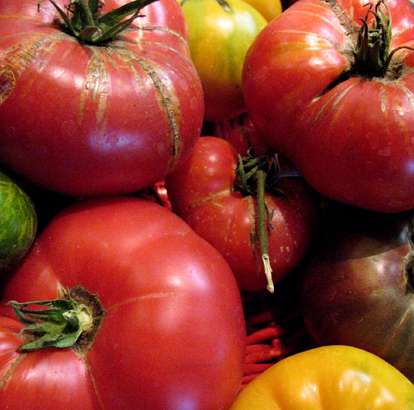
Tomatoes have nothing to do with wild fires, but they are the next food memory I wanted to talk about with you. My Dad grew tomatoes in the far back yard when we first moved to Northern Virginia (and probably long before that, but I was too young or merely a twinkle in his eye prior, so we'll start there). Later he grew tomatoes in the side yard near the back door. The big maple trees had gotten so tall that there was nowhere else to grow things that needed full sun all day.

I guess I inherited the need to grow vegetables from him. Even when I was living in a small apartment in Berkeley with no garden space I figured out how to grow vegetables. My first attempt pleased the neighbors and street people because I planted in the space between the street and the sidewalk. This particular patch also had a telephone pole. The tomato plant thrived and I think I may have gotten one or two ripe tomatoes, but most of them disappeared while they were still green.

The corn (three stalks) was even funnier. I did get about four ears developing, but someone picked them before the silk had even browned over. They probably found that there was a cob and some teeny tiny corn nubbins but they would have been green tasting and milky and not at all sweet at that stage.


Once we arrived in the country I was in heaven. I had a pretty large garden the first year, not realizing that the gophers were there first and would eat whatever they wanted from below ground. It was shocking at first to arrive at the garden in the morning and find that a whole plant had been sucked underground. I did manage to grow corn and one tomato plant survived. It reminded me strongly of that Berkeley experience, but this time the corn ripened and we even invited Max's kindergarten class on a field trip to pick and eat corn, visit the sheep across the fire station lot, sing harvest songs and run around a bit.

The next year I built a raised bed next to the barn with hardware cloth underneath to protect from gophers. I've also learned that the best thing to do is to plant my veggies, and even flowers and bulbs, in pots and wine half barrels. It means more work in the spring getting all that dirt refreshed and is more expensive, but the gophers only get a few things I don't really care about this way.


I found fairly quickly that our solarium is the perfect place to grow seedlings. Every February or March I begin with seeds and end up, by planting time, with sturdy seedlings. My favorites are tomatoes and zucchini, but I also do cucumbers. The beans and peas do best being planted directly in the soil, but sometimes I do the cucumbers that way, too.


One year I grew a dozen different kinds of heirloom tomatoes. Each of three seed packs had four kinds in it. Fortunately, almost all of the seeds germinated, so I had plenty of seedlings to give away to friends. Those were the best tomatoes! So much flavor and so many pretty colors. They were a joy to grow and to eat. There were green zebra tomatoes, black krim, costelluto, a yellow one that I forget the name of, brandywine, and more.

Last year I did something similar, but planted more seeds of fewer varieties and gave the seedlings away to the local Grange for their spring fundraiser. It is a bit of a process going from seed to cell pack to larger seedling pot, keeping them watered, hardening them off before planting and then keeping them healthy until their roots get well worked into the soil and they begin to really grow.


Then it's mostly a matter of even watering (done with a drip system for the last 10 years or so), fertilizer once or twice during the season, tying them up if they are escaping their tomato cage, and usually pretending to be a bee once at the beginning of the time when they set fruit. We used to have enough real bees, but they are not as plentiful, so a camel hair brush helps transfer pollen from male to female flowers. Once the first few tomato fruit are set, the plant seems to get the idea and I don't usually have to help again.

Send me an email if you would like information on to how to start your own seeds the way that I do it. It starts with damp paper towels and small plastic bags, like sandwich bags and, of course, seeds. Be sure to leave the little plastic bags with their roll of paper towels studded with seeds open to let in fresh air, but keep them on their sides to store as much moisture as possible. Once you check them and see that there are roots and the first leaves, get them into the ground or into cell packs (I do the latter) to keep growing. To harden off, take the seedlings outside during the day for a few hours, then take them inside again in the late afternoon, and do that for four days running. After that you remove the lower leaves, plant them with some of the stem (where those lower leaves were) under the soil because roots form there for stronger plants, add water and tomato cages and watch them grow! It's important that the soil warms up before you plant the seedling out. Otherwise they will just sit there, keeping the same size, until the soil warms. That can be frustrating!


So what is the best recipe I can think of for using the ripe tomatoes once they are firm but juicy and fully colored and come off the stem easily? To really enjoy the flavor of the tomatoes, best is just sliced with maybe some salt and pepper. Next would be to drizzle slices with good balsamic vinegar and peppery virgin olive oil, plus a scattering of finely sliced fresh basil. The taste of summer...our here, the taste of early fall.

Thursday, November 08, 2018

Old Fashioned Ice Cream


My favorite dessert is cake, followed by cobbler or crisp, followed by pie. Ice cream comes in close to last. The only time I really enjoy ice cream is when it's very hot out. Of course, growing up hot weather happened all summer!

If you've ever made your own ice cream using an old fashioned ice cream machine that uses rock salt and ice and a crank, you know that getting from the initial creamy liquid to the actual ice cream that is solid enough to eat is a long and tiring process. At some point during my childhood my Dad missed good, dense, old-fashioned ice cream enough that he bought one of those machines and we made ice cream.


I think we started with vanilla. My Mom made the liquid custard that you start with and my older brother had a great time mixing the rock salt and ice and packing it around the ice cream container to chill the liquid.


My Dad fit everything together and we took turns cranking. It really seemed to take a looooooooong time! The finished product was good but not spectacular. I suspect that if we had taken the time to chill the ice cream in the freezer for a half hour or so I would have been more impressed but the children would have been up in arms about the wait.


What came out of the churn was sort of a soft-serve mostly frozen but still a bit milky treat. It did taste good. In truth it was far better than most ice cream available at the store, especially since most store brands were made with vanillin, an artificial substitute for real vanilla. If you added enough chocolate syrup the stuff from the store was OK, but the freshly made ice cream didn't need any additions, just a bit more chilling.


My favorite of all the kinds we tried making was the peach. Freshly made peach ice cream is a bit of heaven in my opinion. Sweet dairy and tart but sweet peach is a great combination and I think my Mom added just a touch of freshly ground nutmeg, too. We could have had that every night!


We had an ice cream store a few miles away that we were taken to as a treat on occasion. It was a High's Ice Cream store. My favorite flavor there was Lemon Custard. It had some tartness to it that made the sweetness even better. After that I liked chocolate...big surprise, huh?


A family favorite was Neopolitan, which we bought at the A&P grocery store in a block so it had bands of vanilla, chocolate and strawberry ice creams. You could scoop the ice cream so that your bowl had all three flavors, or you could just slice it so that you only had one kind or even two kinds. With a large family this versatility helped to avoid many squabbles.

Once we moved to the north bay area, we were delighted when a new ice cream store opened up in Sebastopol, right on the corner of Hwy 12 and Hwy 116 N. It's called Screaming Mimi's and it has a wonderful array of flavors, often using local ingredients. The fresh strawberry ice cream using strawberries from a farm just down Hwy 12 is outstanding!


Do you have a favorite ice cream memory? Favorite flavor? Favorite Brand?


Wednesday, November 07, 2018

The One With Easter Eggs


I know it's November and by the time that Easter rolls around next spring you will have long forgotten this post, but that's O.K. I'm doing Food Memories all November and Easter Eggs have a long and honored position in those memories.

As a youngster I joined my sisters and brothers around the dining room table to color eggs before Easter. My Mom covered the table with newspapers and there was probably a waterproof sheet under those. We usually made a mess.


The basic concept was to take a hard boiled egg and dip it into a water bath that had been anointed with apple cider vinegar and colored with food coloring drops. Mom would always do the boiling water in the coloring bath until we were old enough to handle that.

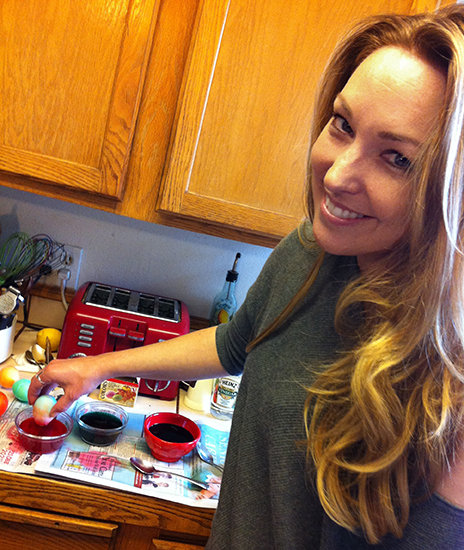
The longer that the egg sat in the color bath, the deeper the color became. Still, you couldn't leave it in very long because someone else always wanted to use that color for their egg. A favorite way to identify the eggs you colored was to use a paraffin candle before coloring to draw a design on the egg or write your name. Crayons worked, too.  It's amazing how many lovely eggs can be made just using yellow, red, blue, green and purple dyes. The purples were always a little sickly looking...mixing colors wasn't easy. You can also do a two-toned egg by dipping an egg that has some color into another color halfway, like in the photo below.


Of course once you have all those colored eggs you have to do something with them. Little kids love to hunt for hidden Easter eggs and the colors make them fairly easy to find. Some adults like to hide the eggs even more than finding them. My Dad was one of those and so am I. It really helps to make a firm note of where all the eggs are hidden. I remember one year when I was a did and we thought we had found them all only to discover that there must have been one hidden too well. How did we know? The couch started smelling like rotten eggs. Sure enough. There, in the crevice between the support of the couch cushion and the side arm there was an egg that had wiggled down there (probably due to folks wiggling on the cushions, but then we were a lively bunch!) and was hidden long enough to spoil. Be warned! Make a list of where you hide the eggs.

When my kids were little we did pretty much the same thing as I  had done as a kid, although a few years we tried the fizzy tablets that were sold at the store instead of the vinegar and boiling water and food coloring mixture.


Lately I've been lucky to be able to color eggs with my daughter, although not every year. Some years we do the traditional boiling water-vinegar-food coloring egg baths.


The latest springtime fun is trying new techniques with her. One year we shook the eggs in bags that had raw rice and drops of color. That was a good one. The rice made little darker streaks and dots so the eggs had a very textured look.


Another year we put shaving cream in pie pans and did marbled eggs. Another good one, but I can't find any photos - probably too messy to take photos, but it sure was fun! One year we blew the contents of raw eggs out through a tiny hole in the eggs shell and colored the shells. Very pretty and you can keep them for next year...which we did!


Do you have any favorite way to color eggs for Easter that you'd like to share? It would be fun to try something different next year.