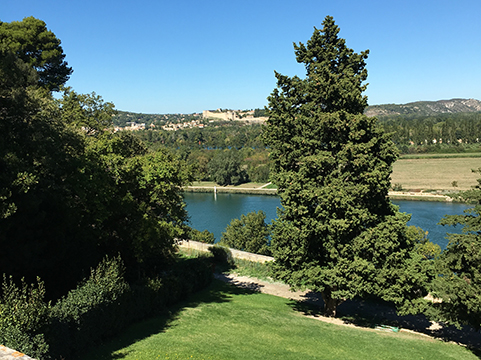
Saturday, November 26, 2016

Arriving in Paris


We left our rental car in Avignon (Goodbye GPS Beatrice and thank you!) and took the high speed train to Paris. Highly recommend! The train is very comfortable, quiet and speedy and very affordable. Do be aware that the seats are placed slightly above the aisle. When we switched places after about a half hour because Sweetie wanted to sit by the window, I didn't see the change of level due to the dim lighting, so I fell and hit my forearm and elbow, although mostly I was embarrassed.We saw acres and acres of crops as we sped north. Once we reached the Gare de Lyon and left the train we had the first part of our puzzle...how to use the Metro. Other travelers were extremely helpful both is assisting with the ticket machines and with directing us to the correct platform to go to Gare du Nord where we were getting off. The apartment we were renting was supposed to be only a few blocks away from there. After spending a week in France where everywhere we went it was tidy, with no litter or graffiti, it was noticeable and surprising how littered Paris was, starting with the train station and continuing on to where we stayed. Love this blue door, but not the grafitti.


The next part of the puzzle was finding the correct streets to get to the Anvers Park, which seemed like a good landmark to head to since I knew that it is across the street from the apartment. After a little zigging and zagging we entered the park and looked around. 


No sign of the bar where we were supposed to get the keys. By this time we were a bit tired, so we sat on a bench in the sun and relaxed a few minutes, then phoned our Paris contact person. She explained that we were at the wrong end of the park. It runs a full block and the bar we were looking for wasn't visible from where we sat. It was by the Anvers Metro station.


So we walked up the block and I went into the busy bar (the theory being that I can sort of speak French) and eventually I did secure the keys. The door of our building was only a few doors down from the bar, but the key was tricky, the elevator was tiny (one suitcase and one person per trip tiny), and...yay...the apartment was absolutely lovely. The living/dining room was light and airy with a tall window that looked out onto the park. The kitchen had a bright red wall and an efficient layout and everything one could want, although we did forget that the owner had told us where the placemats were hidden below the oven. The bedroom was not huge, but not tiny either and it had a window looking out on a courtyard. The bed was comfortable and there was a reading lamp.
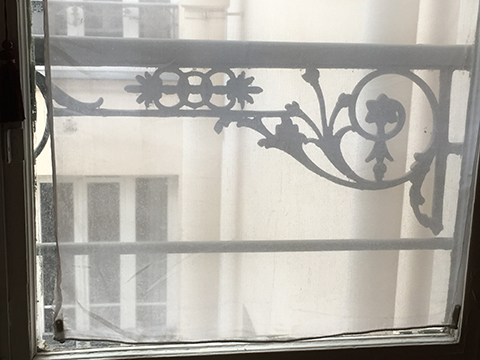


It was quiet and the living room had a very comfortable couch, decent chair and a good reading lamp. There was also a coat rack just inside the front door and a nice bathroom to the right of that. There were beautiful paintings and art pieces and lots of travel books. We settled in for a while and then had dinner at the bar where we had gotten the keys. Nothing to write home about (or to post about either).Before we went back to the apartment we found a tiny produce shop where we purchased some lovely organic fruit. The next day I had fun finding other local places to purchase fresh food and we were able to have a nice pork chop dinner at home the second night,


a number of breakfasts, including some great Polaine bread toast,


and at least one lunch. I know that Paris has spectacular food, but much of it also has milk, cream, butter and cheese, so knowing what was in my meals gave me great peace of mind, plus I had always wanted to cook in Paris!


The Anvers area is just a few blocks from Sacre Coeur Cathedral and in the lively Montmartre area. This used to be the artists section of Paris and there is still a bohemian flavor to the neighborhood. I loved that it was diverse. We passed people speaking many languages and of various skin tones and types of dress. When I was walking around doing the shopping I noticed shops with exoctic spices from Turkey and Iran and Morocco and similar signs that this area of Paris is cosmopolitan. The people watching is fun, too.


In the morning the park is quiet and the view across it is towards the area where artists like Toulouse Lautrec lived.


About 9 am the children start to arrive to play and the park is lively with the noises of children playing until about 7 pm when they go home. The park is mostly sunny, so there are plenty of people other than children who enjoy sitting in the sun on the benches, too.

About a block away I noticed an antique store with pretty things in the window.


Further down, on the Rue de Martyrs, I found the macaron shop of my dreams, Arnaud Delmontel.
They had other baked goods, but this is what caught my eye:


I purchased three of the raspberry ones since they were filled with raspberry jam (no buttercream) and I love raspberry. I ate them with afternoon tea later that day and they were perfect!


Another shop I passed on the same street was a boulangerie, with a window filled with tarts, palmiers, and a number of different kinds of bread. Since I had plenty of baguettes and a whole pound of the Poulaine boule, I passed it by.


There was a fantastic natural food store, a regular grocery market, and a green grocers where I picked up items for our meals in Paris. I think I enjoyed the shopping quite a bit too, although I never made it to a market like the one in Lourmarin. Never made it to a bookstore with English language books, either, although we did visit one where all the books were in French (totally wasted on book-loving Sweetie).

Tomorrow we will be taking another Metro ride and visiting the area of Paris by the Seine.

Friday, November 25, 2016

Pie Crust


Since pie was Dad's favorite dessert, it was important to learn how to make a good pie crust. Mom had me read a cookbook that had 6 pages on how to create a flaky pie crust. I read it through twice and then tried to put what I had read to work, with assistance from Mom. My crust was a success!

That was the first time I realized how well I could learn from a cookbook. It was the start of a life-long love affair with both cooking and cookbooks.

2-Crust Pie Pastry
a non-dairy variation of Mom's recipe

2 1/4 cups all-purpose flour, sifted
1 teaspoon salt
1/2 cup (1 stick, 4 oz.) non dairy margarine (or butter), cut into 8 pieces
1/4 cup shortening
Ice water - about 1/2 cup

Have all ingredients cold. I froze the margarine overnight, put the flour and shortening in the freezer for 15 minutes and had icy cold water ready, too.

Place flour and salt into a bowl and mix together. With a pastry blender or two knives, cut the margarine and shortening into the flour until mixture resembles coarse meal. There may be some pea-sized pieces of fat, but most will be very small.

Sprinkle water, a tablespoon at a time, over mixture, stirring gently with a fork until all is moistened (6-8 tablespoons). Press dough gently into a ball. Divide into two equal pieces and make each into a flattened ball. Wrap in plastic and chill before rolling out.

Roll out each piece in turn until it is slightly larger than the pie tin. Keep the piece not being rolled in the plastic wrap. Once rolled out, fit the rolled dough into the pit tin. Trim the edges so that about an inch to an inch and a half hangs down from the rim. Fold that extra dough under and flute the edges.


Now you are ready to fill your unbaked pie shell.

Thursday, November 24, 2016

Pies


Happy Thanksgiving!

Although I love pies, especially eating them, I don't make them often...especially not as often as Sweetie would like.

I do make pies for Thanksgiving. My two favorites are pumpkin and pecan. If asked, I don't think I could choose between them.

One thing I discovered this Thanksgiving is that I really shouldn't make pies very often, because I seem to have no self control when it comes to pies...I want to eat the whole pie.

This year I used my Mom's recipe for pie crust but used a half cup (1 stick) frozen non-dairy margarine instead of the same amount of shortening, which meant that the shortening was 1/4 cup. All of the crust ingredients, even the flour, spent some time in the freezer, so everything was good and cold, which helps a lot when you are making pie crust dough.

This was perhaps the best pie crust ever. It was easy to work with, crisp and flaky and delicious.

Take a look at the two pies I made with this pie crust dough. Since both pumpkin and pecan use single, unbaked, crusts, I made one of each. Heavenly!


Its getting late, so I'll post the actual recipe for the pie crust dough tomorrow...just below here.

Wednesday, November 23, 2016

Around Avignon


Walking through the plaza by the hotel in Avignon with Sweetie we approached the row of outdoor cafes, sitting right next to each other so that the only way to tell that it was a new cafe was that the chairs were a different color.


This same plaza had a lovely mosaic of a coat of arms...perhaps that of the Pope?


I was able to read the French descriptions of dishes pretty well and I had my handy bookmark sized graphic. I was able, in French (je suis allergic), to tell the waiter who wanted to seat us that I was allergic to dairy, but the graphic helped a lot. The waiter took it to the kitchen and showed the chef and all was well!


Our first meal in what was to become 'our' cafe was a simple herb omelet for me and a pizza for Sweetie. At dinner we both had the special which was an amazing lamb shank with chunks of vegetables, cooked in a slow braise method that yielding meltingly tender lamb and a delicious sauce. Thank heavens that we had plenty of baguette slices to help us enjoy every bit of that sauce. No photo of the lamb shanks, because we were so busy enjoying ourselves that we never thought of it as a photo op.


As long as I'm talking about their food, I have to say I was curious about the mussels (moules in French). Sometimes it seemed like every other table had at least one order of them and you could tell because they came in a large black metal pot...and with an order of frites (fries). This was not true for some of the other cafes in the area, so it seemed like it was a specialty of this cafe. For our last dinner in Avignon I wanted to order them, so I showed the bookmark to the waiter, asked 'moules et frites?' and he smiled and nodded 'yes'. It was an enormous portion of tender mussels with a lovely broth in the bottom of the pot to dip the fries into. If you go to Avignon, try out the moules et frites at Le Forum cafe. Sweetie enjoyed a plate of pasta and meatballs.


Still thinking about food, I have to say that I would have loved to try the brioche loaf


that the Hotel de l'Horloge served at breakfast. Sweetie said it was moist and very rich. He also enjoyed the petit croissants, served in a woven basket. I enjoyed the local honey that was available where they served jams. It went very well on the ever-present baguette.


The plaza has a lovely carousel, which the children especially seemed to enjoy riding, but the adults enjoyed looking at.


There was also the Theatre building which served for lots of cultural performances, including opera and ballet. Here Molière, who was an actor and playwright, watches over the entrance.


The pace was so relaxed that I confess that the various walks we took around town happened on different days, but I can't recall in what order. On one of those days we walked around the old part of town and discovered the traditional French candy Calisson, which is made in the region of Proven, especially in Aix-en-Provence where almonds became an established crop in the 16th century. The Calisson are made from a paste of candied fruit (mostly with a melon-like flavor) and ground almonds, with a thin layer of royal icing on the top. They are shaped almost like an almond and are about two inches long. As you can see from this photo, they come in lots of flavors including chocolate. Since these same candies were known in Italy in medieval times, I wonder if members of the Pope's entourage who came from Italy brought the yearning for them to Provence? 


The same shop had a lot of cookies and hard candies, plus beautiful trays of candied fruits.

Since in two earlier posts I took you through the Palace of the Popes, to the bridge at Avignon remembered in song, to a picnic in the gardens and to the Pont du Garde, as well as a walk through the town that included umbrellas in the air, we probably have had enough of Avignon, so it's time to say goodbye.

Read about those and see the photos at these two posts: HERE and HERE.

Tuesday, November 22, 2016

Avignon and the Pope


Having probably bored you with too much information about the Romans in Provence, we now jump forward over a thousand years to 1309. In that year the  Pope decided to set up a French version of the Papal seat in Rome. (This is not the first time that the papacy was installed outside of Rome. A few popes prior to this, the papacy was seated in Naples.) 


In 1309 Avignon was a small village on the Rhone river. When the first Catholic Pope from France, Clement V, was installed, it was decided that Rome was too dangerous. The finest gothic building in Provence, and the largest gothic structure in Europe, was the Palace of the Popes, constructed between 1334 and 1364, during the brief period from 1309 to 1377 when Avignon was the seat of the papal curia. It was one of the largest and most important buildings in Europe. Construction was begun by Pope Clement V, who was born in Aquitaine, and continued by his successors. The construction of the 10-acre, heavily fortified palace consumed most of the income of the papacy during this period. It served as the residence of two popes  Clement VII and Benedict XIII, before the papacy returned permanently to Rome.

While the outside of the palace looked like a fortress, the inside was lavishly decorated with tapestries, sculptures, and decorated wooden ceilings. 


At a much later date it was used as a prison. When we visited they were still working on restoration to the original, Papal, configuration, 


getting rid of sections that had been walled up while it was a prison and repairing and restoring damaged areas, including old frescoes. 


The Pope enjoyed fine wine and established vineyards near Avignon. The land immediately became Papal property, hence not taxable. Eventually the French in the area started to get tired of losing good taxable land, so they built a fort across the river to discourage the Pope from crossing and annexing those lands.

In the evening of the second day we were in Avignon, they had the last of the light shows of the season at the Palace du Papes, so we were able to walk the couple of blocks from our hotel to the plaza in front of the Palace and enjoy the palace lit with pink lights and watch the crowds of young people waiting to get inside for the light show. The music inside was going and too loud for us even standing quite a distance away from the palace. Guess we are old folks alright.


We really enjoyed Avignon. It had a relaxed pace, some great places to eat and people watch, nice shops and old streets and buildings, but it felt more comfortable than touristy. Our hotel, Hotel de l'Horloge, was excellent, comfortable, spacious, had an elevator, served a generous buffet breakfast as part of our reasonable lodging fee,


had a quiet and comfy lounge on each floor in case you wanted to just sit and relax but not in your room,


had a very helpful reception staff and was just steps from the main plaza.


The first evening we took the recommendation of one of the front desk staff and ate at a nice restaurant on the way to the plaza by the Palace du Papes. The food was excellent. Sweetie had some wonderful escargot. I had forgotten to bring my bookmark explaining my dairy allergy, so I ended up not eating my salad since we couldn't find out if the dressing had dairy.


The tables had wonderful artwork under the glass. Ours looked like a Moulin Rouge knockoff.


It had been a long day, what with the drive from St. Saturnin-les-Apt with all the roundabouts, finding our way to the hotel, getting settled in and exploring the town, and then having a late dinner. More in the next post!

Monday, November 21, 2016

Romans and Hill Towns


I might have been in France for the food or the art and culture, but Sweetie was interested in the Roman influence.

In 123 BC the Romans founded Aix-en-Provence, and two years later began improvements at Nemausa (today Nimes.) We visited Aix and soon would learn a lot about the Romans in Nimes at the Pont du Gard.

As we left St. Saturnin-les-Apt and drove towards Avignon, we were leaving the eastern area of Provence that had been pacified by the Romans and heading towards the western area of that same province, which historically extended all the way to Nimes and the Gard river. 

Apt, just below St. Saturnin-les-Apt had been a major Roman settlement for retired Roman legionnaires and also one of the places on the Via Domitia, a major Roman road built in 118 BC. This road was partly for commerce, but also part of the Roman defense system because it went from the easiest crossing point of the Alps, through Sisteron, Apt, and Cavaillon to Tarascon. Our route to Avignon took us along this same way as far as Cavaillon,(first photo below from "X" at right to Cavaillon on left) but then we turned northwest to Avignon (second photo below from Cavaillon on right to Avignon at left).


The Pax Romana, or Roman Peace, in Provence lasted for nearly three centuries. During this period, all of Provence, from the Alps to the Pyrenees had for the first time the same language, administration, currency and culture. Residents of Provence felt secure enough to give up their fortified hilltop towns (like St. Saturnin-les-Apt and Roussillon) and move down into the plains to towns like Avignon. As Pliny wrote, "it was more than a province, it was another Italy." During that time the citizens grew used to abundance in the markets due to Roman trading and good roads, there was often abundant water from aqueducts, and the Romans built huge public works like public baths, theatres and stadiums, and temples.


The Pax Romana in Provence lasted until the middle of the 3rd century. Germanic  tribes invaded Provence in 257 and 275. At the beginning the 4th century, the court of Roman Emperor Constantine (280-337) was forced to take refuge in Arles. By the end of the 5th century, Roman power in Provence had vanished, and an age of invasions, wars, and chaos began. People returned to the hill towns for protection and new walls were built.  Because of the repeated invasions, Provençal architecture was designed to resist attack. Monasteries were surrounded by towers and walls, and even the bishop's residence in Frejus resembled a fortress. Castles on hilltops surrounded by walled towns became the characteristic architectural feature of Provence. Only in the 17th century, after the wars of religion had ended and the French king had established his authority, were the towns of Provence safe from outside attack.


Some towns like Lourmarin have later chateaus that likely were built during relative peace since the chateau has protective walls, but the town itself seemed like it was not too worried about walls and protection.


Here and there you can still find remnants of Roman civilization in Provence. The multitude of fountains in Aix is an example of the influence of the Roman ideal of using flowing water as a design element and to keep the town clean and to provide water for drinking and bathing. One of the places we wanted to visit, using Avignon as a base, was the Pont du Gard, one of the best examples of Roman aqueduct building still standing. The water it carries went to Nimes in the far western section of Provence.

Nemausus (which became Nimes) was the capital of the Volcae Arecomici before the Roman conquest. In 118 the area came under Roman influence as the Via Domitia brought more Romans to the area. Nimes was primarily a veterans colony in 28 BC. At its peak it has been estimated that the population was around 50,000 people. The aqueduct, part of which is seen at the Pont du Gard, was built during the second half of the first century and it brought clean water to the city. The Romans had been using aqueducts to bring water to their cities since 313 BC or longer. The Roman aqueduct  has been preferred to any other plan for conveying water in large quantities a considerable distance, over great inequalities of ground, for a long time.


Water brought to a city was divided and the public uses included ponds and fountains, amphitheatres, baths, and military camps.


Public baths and fountains were a distinctive feature of Roman civilization. The rest went to the general public for private use.  

This Roman influence in Provence might not be of extreme interest to you, but it was one of the reasons that we decided to spend a few days in Avignon.